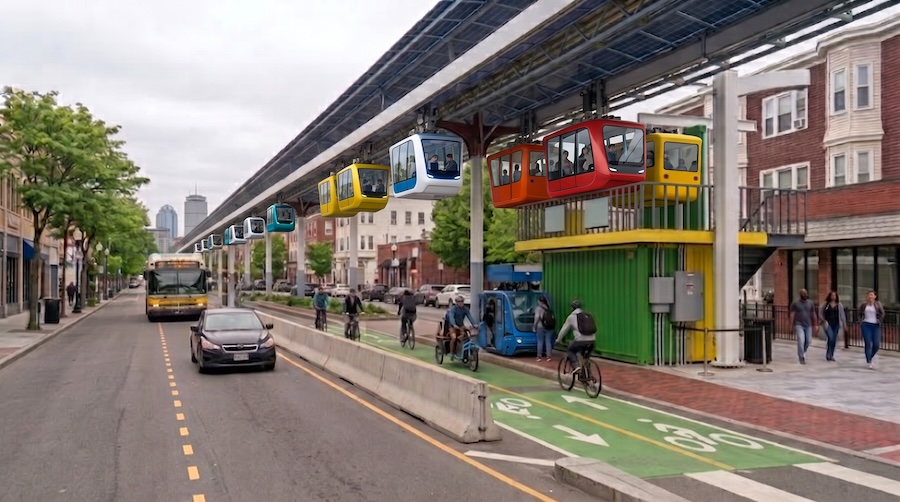
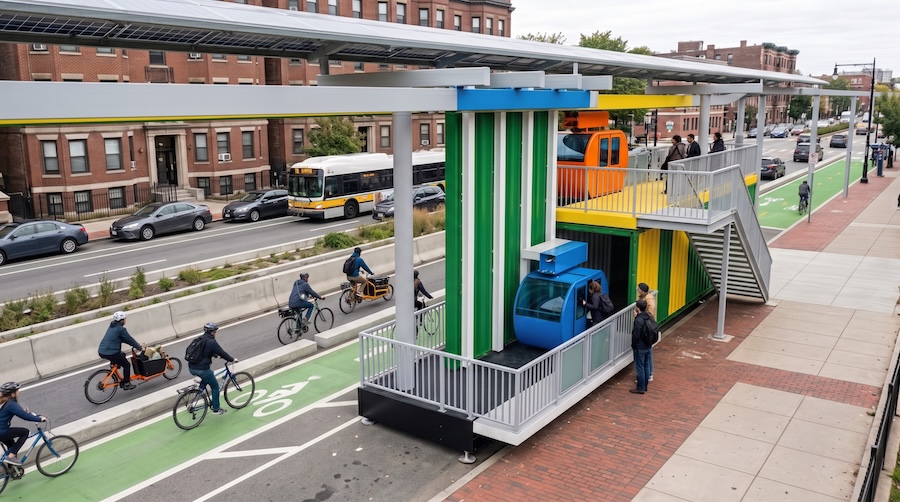
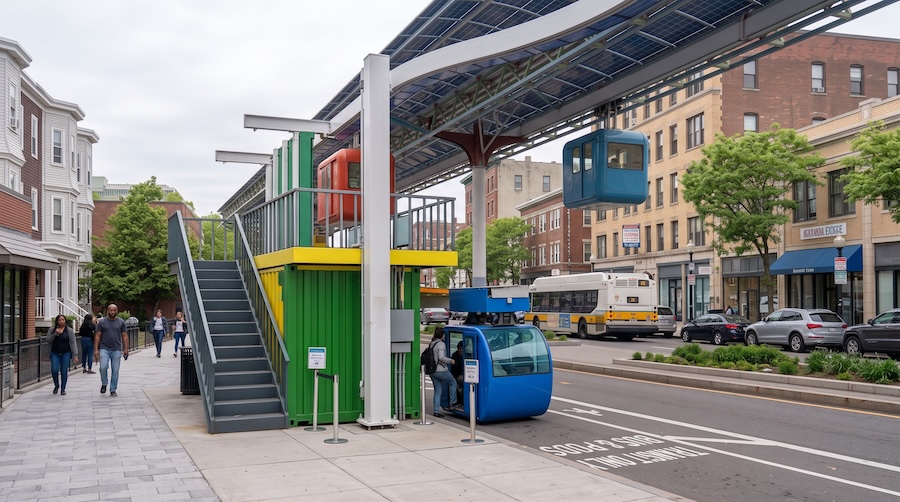
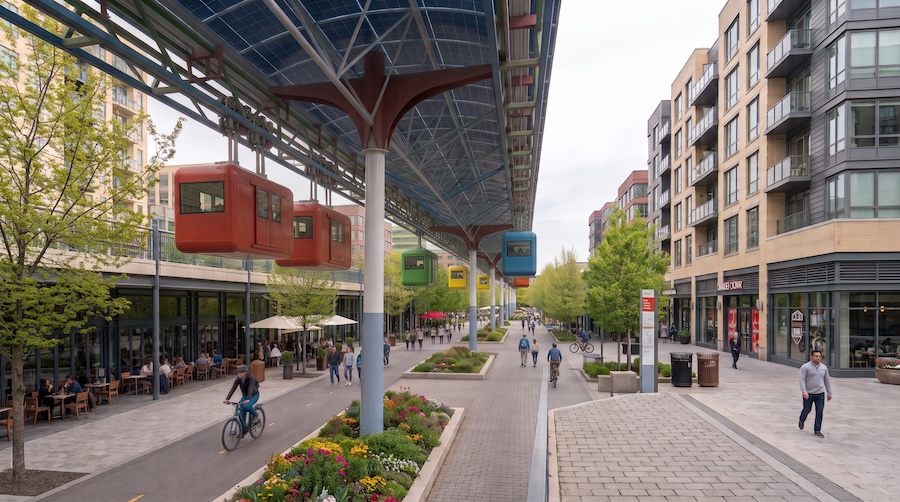
Can you imagine Blue Hill Ave without traffic, safe to walk and bike?
Can you imagine access to Boston without a car, without parking requirements, on-demand, 24-7, and the personal service of a chauffeured car?
JPods networks are privately funded, solar-powered, and can be built immediately.
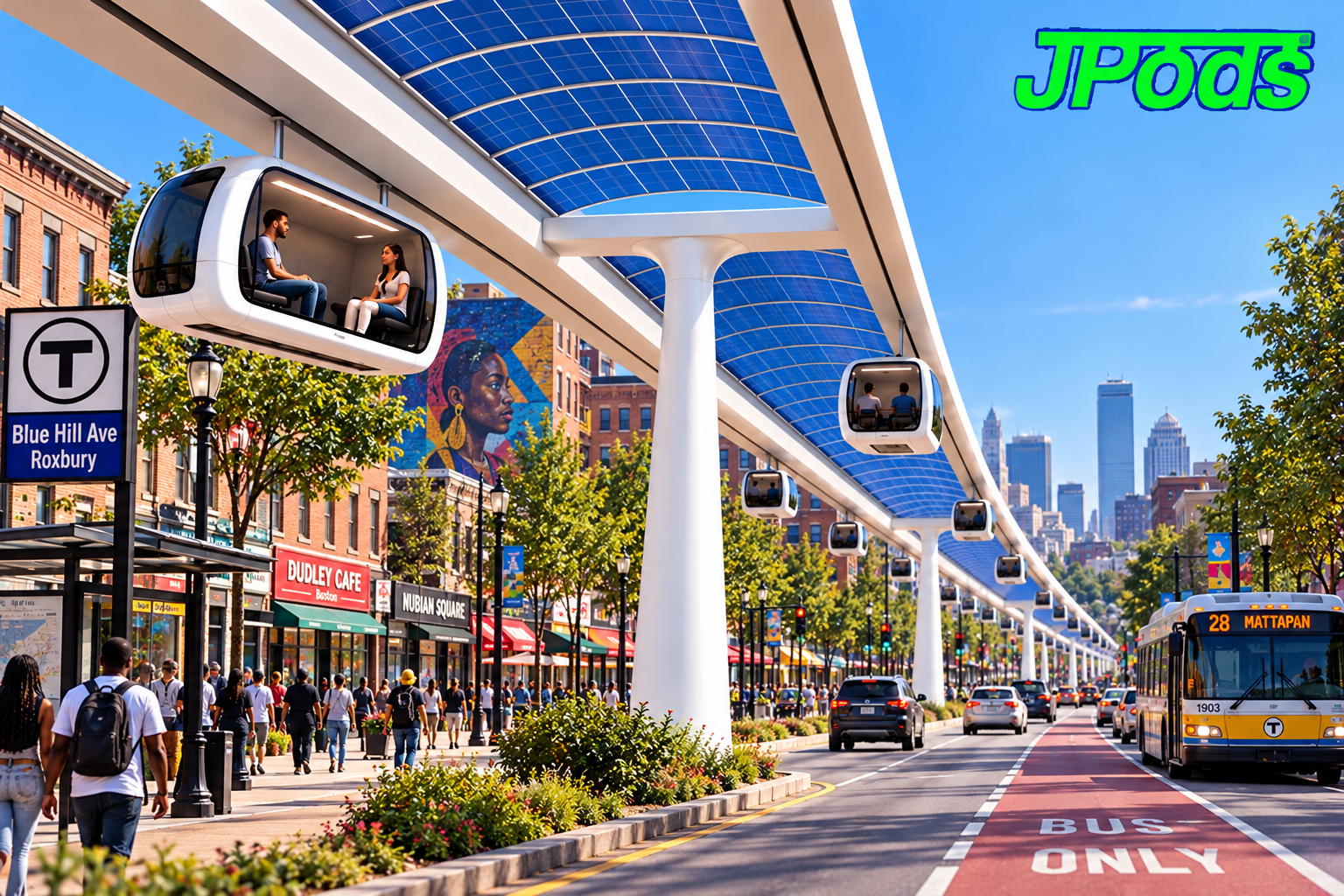
JPods networks modernized the 54-year success of the Morgantown PRT (Personal Rapid Transit)
We have known the solution known the solution to urban traffic problems, rising oil prices, and Climate Change for half a century. Yet Federal regulations block such innovations.
President Nixon sent his daughter, Tricia, to open the world's first electrically powered, grade-separated network of self-driving cars in Oct, 1972. Walter Cronkite opened the news coverage with, "One of the big problems in this country is something many of us run into every day, traffic jams." Tricia Nixon said it was(opens in new tab) “more fun than Disneyland.”
It was part of his plan for the environment and energy. He would later state the objective, "At the end of this decade, in the year 1980, the United States will not be dependent on any other country for the energy we need. We will hold our future in our hands alone."
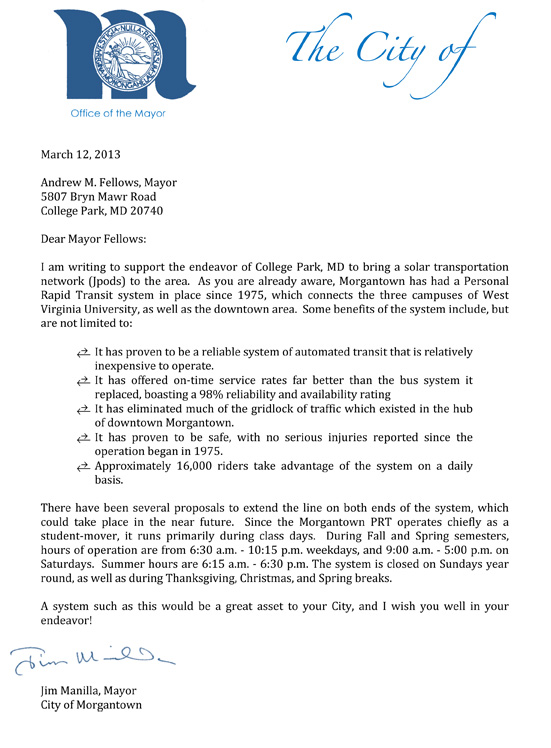
This network is still operating today with outstanding success as noted by the Mayor of Morgantown in this 2013 letter:
JPods US Patent improves on the Morgantown PRT in two important ways (6,810,817)(opens in new tab):
- Robots replace the central computer control system: “A method of controlling a transportation System for moving people, freight, and any combination whereof using a distributed network of intelligent devices without requiring the aid of a human driver”
- Networks are solar-powered: “The method... providing... Solar and wind power generators integrated into the physical Structure of Said transportation System....”
Resources available to you:
- Design mesh networks at www.MeshMobility.com(opens in new tab)
- Calculate savings in a city at www.PersonalizeTransit.com(opens in new tab)
- Build CAD models at www.JPods3D.com(opens in new tab)
- Learn the technology at www.10XMakers.com (opens in new tab)
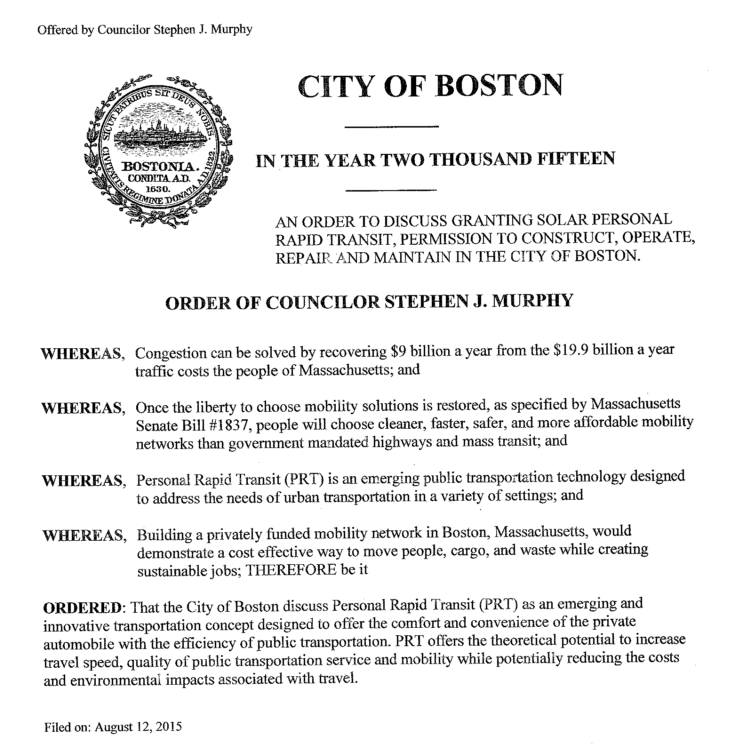
- Boston City Council Hearing, 2015(opens in new tab)
- TEDxAtlanta(opens in new tab) and Red Bull TV documentary(opens in new tab) on the future of transportation
sdfdf(opens in new tab)
dsfsBo(opens in new tab)
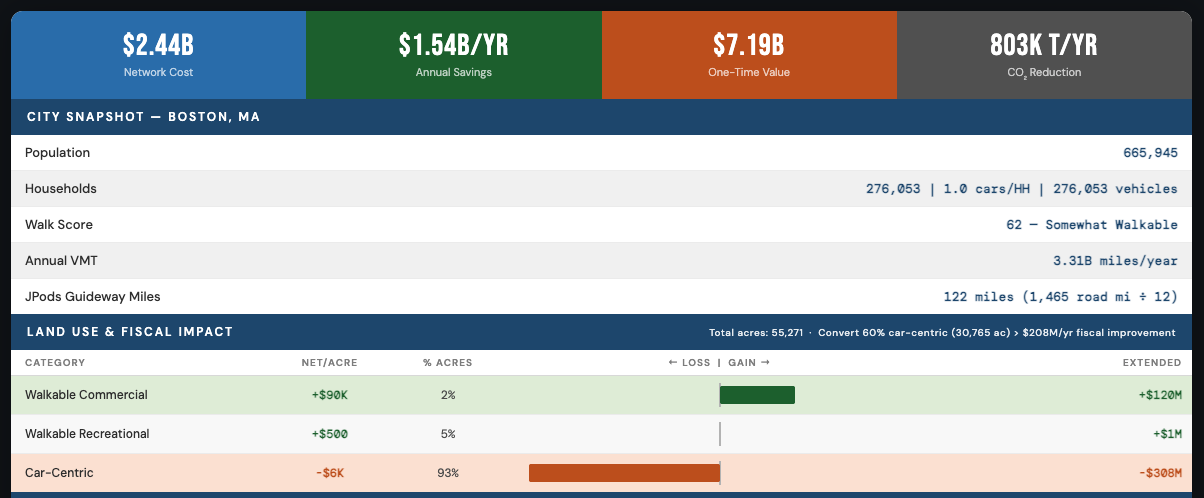
Personalize Transit ai assessment of traffic savings in Boston. Note that not all savings can be monetized by JPods. For instance the cost of traffic death and injuries cannot be monetized.
Harvard estimates the cost of traffic to the people of Massachusetts at $64 billion per year(opens in new tab). A privately funded network by JPods is likely to save $1.5 billion per year in Boston. As networks are built in other Massachusetts cities, the cost savings will grow.
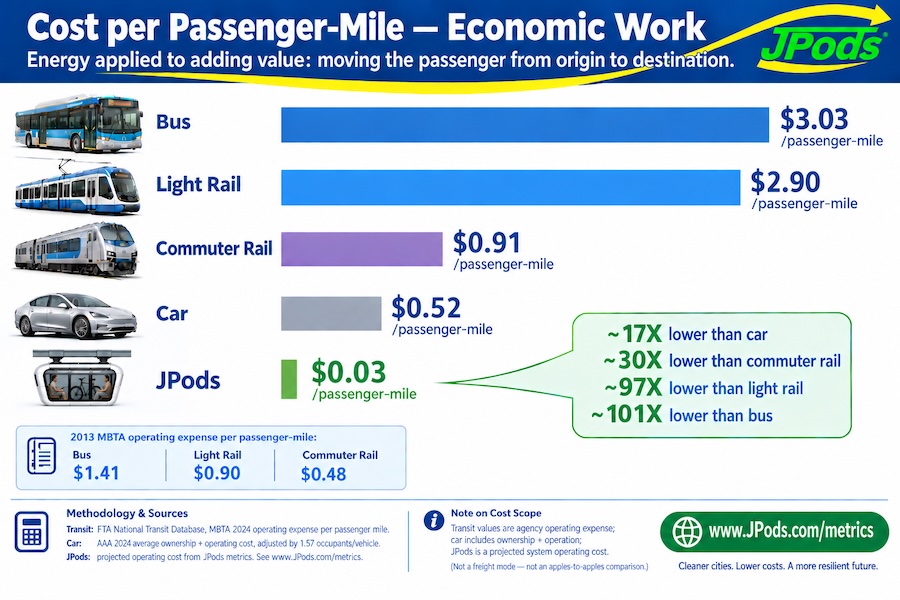
What pays for the building and running of JPods networks is the cost savings per passenger-mile.
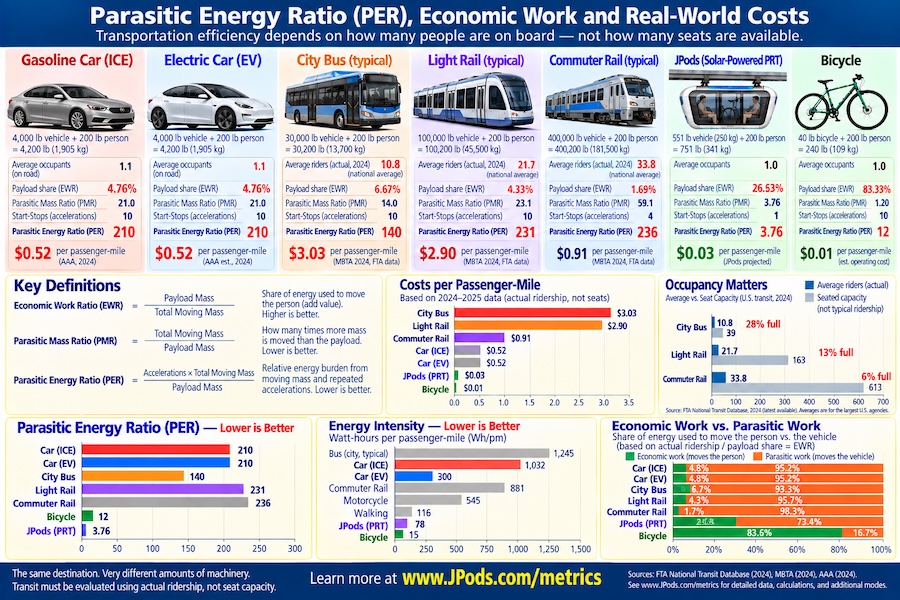
Parasitic Energy Ratio illustrates how roads and mass transit drive Climate Change and oil wars(opens in new tab). Vast amounts of energy are consumed moving tons to move a person. Bikes are the best answer for last-mile transportation. JPods are the best answer for urban cargo and middle-mile transportation. This graphic is busy but it shows per passenger-mile: cost, energy, and Parasitic Energy Ratio -- the relative wasted of energy of moving the vehicle in start-stop traffic.
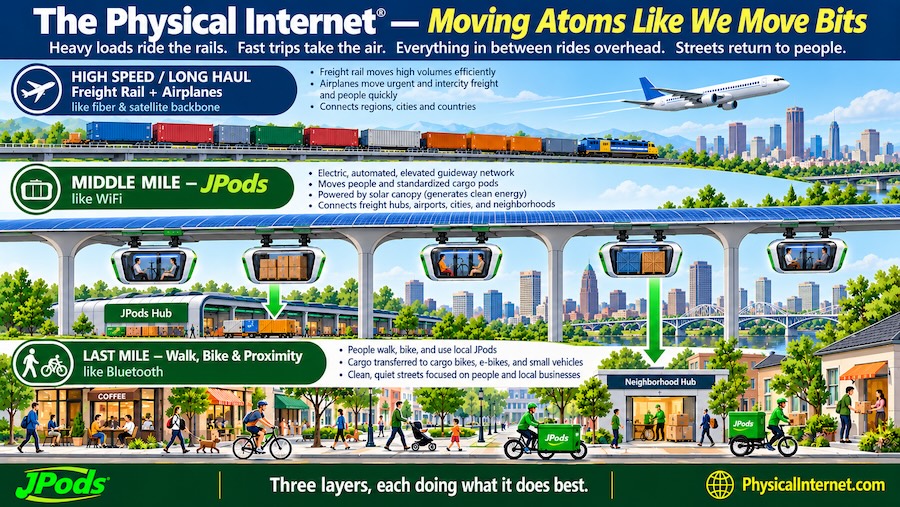
The Physical Internet® is very much like the Internet, with 3 overlapping network layers. Airplanes and freight railroads for high speed and heavy lift (fiber optics), JPods for middle-mile people and cargo (WiFi), and bikes, walking, golf carts, Uber, etc, and proximity for the last-mile (BlueTooth).
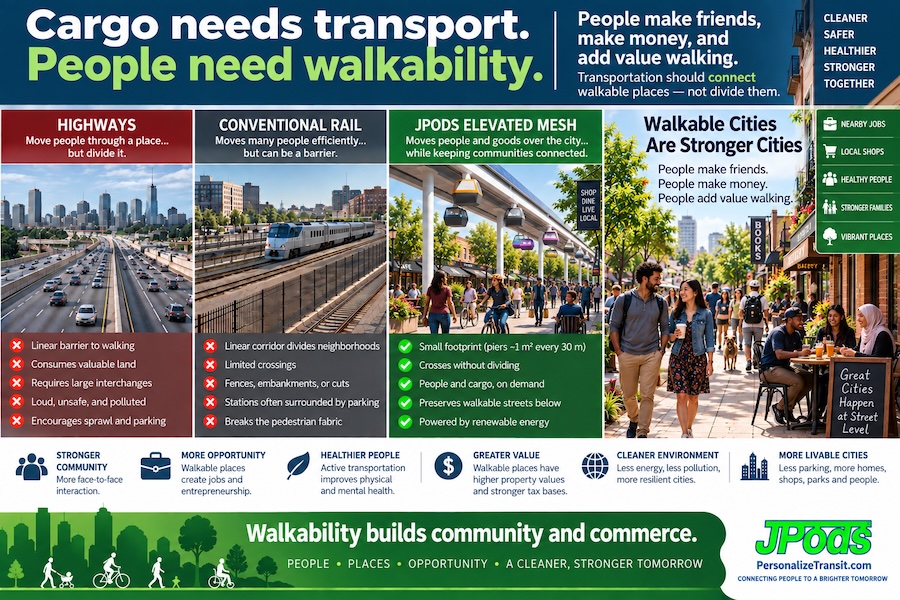
People make money, make friends, and build community walking. JPods network removes the linear barriers to commerce and community.
Mesh Mobility Examples:
Travel time 24x7 from Mattapan station. Walk to a station, ride to another station, walk from that station. Green is 5 minutes. Blue is 10 minutes. Yellow is 20 minutes. Red is 30 minutes
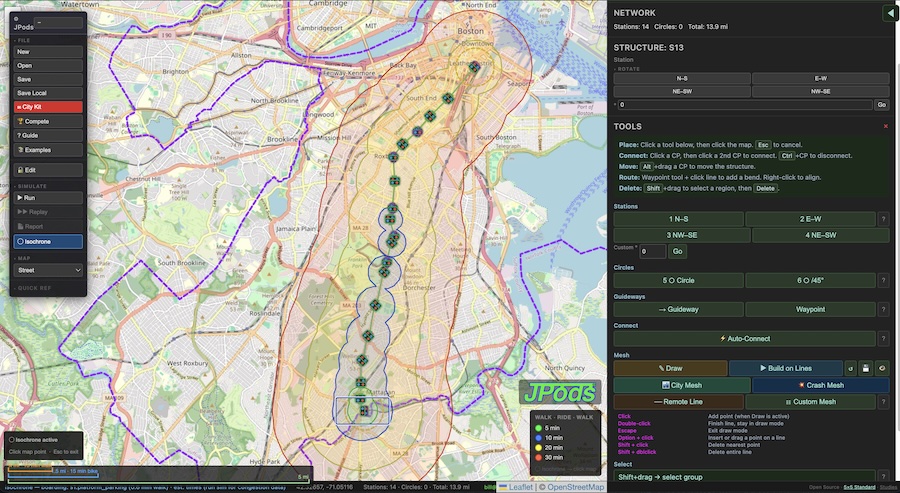
From South Station
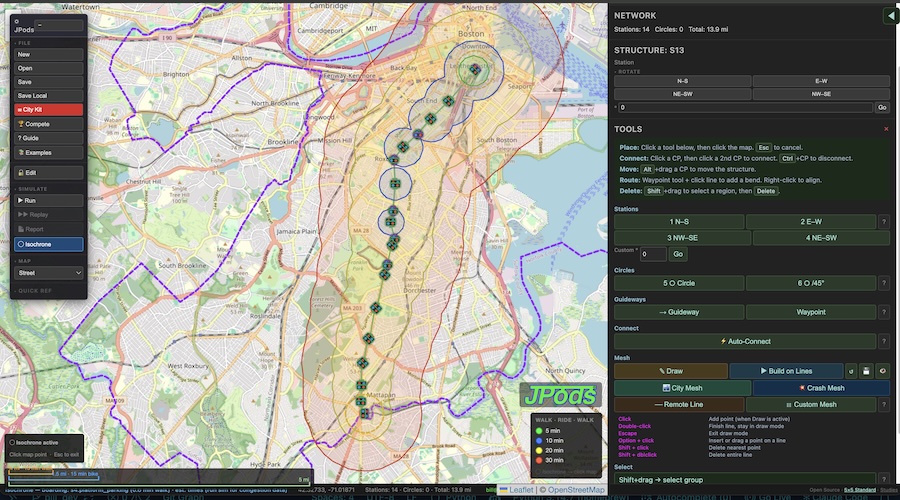
From South Station
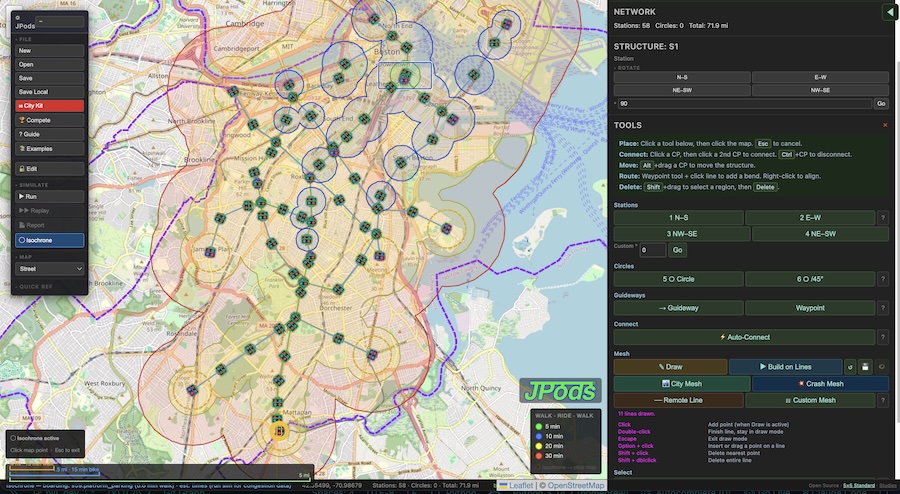
From Back Bay
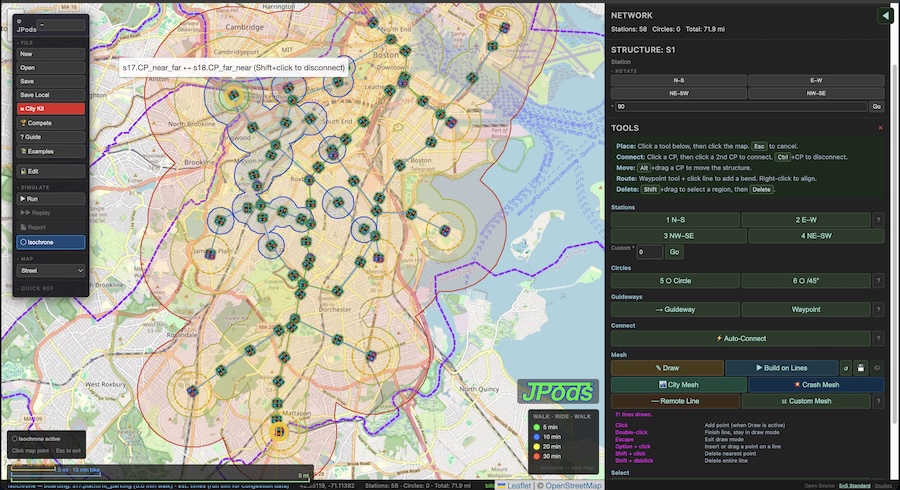
From Georgia Street
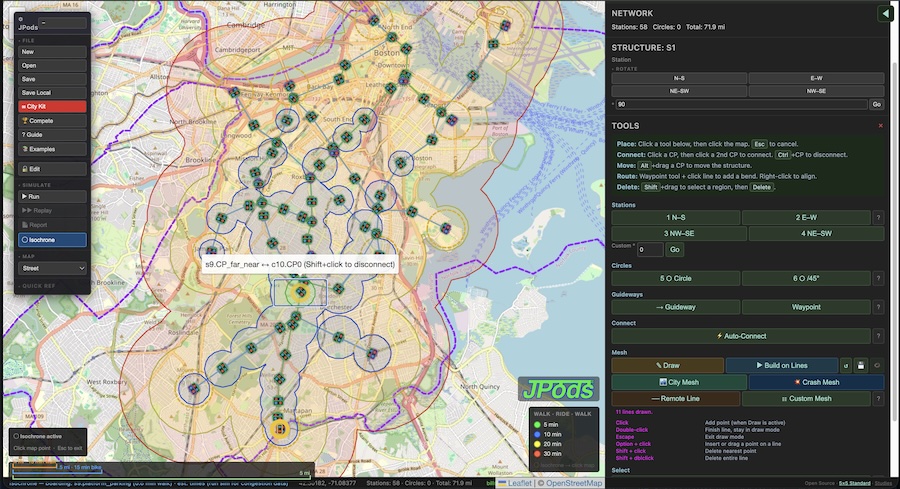
From Logan Airport
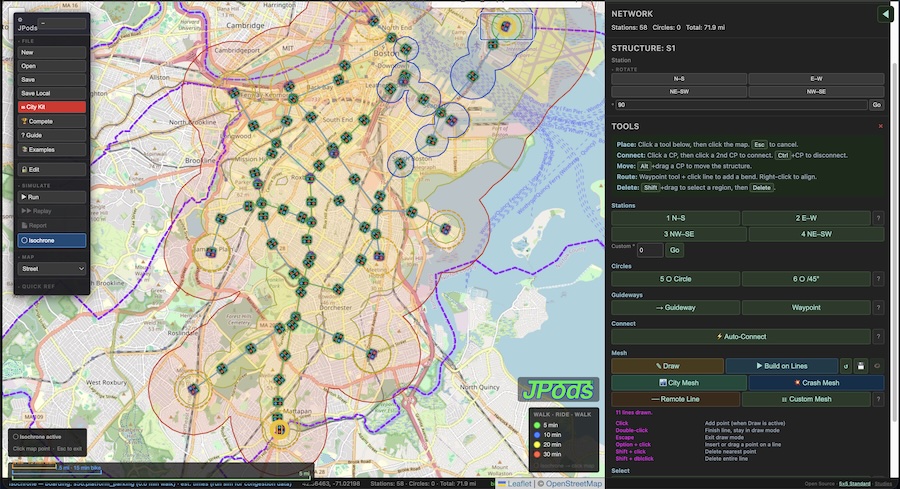
From Mattapan
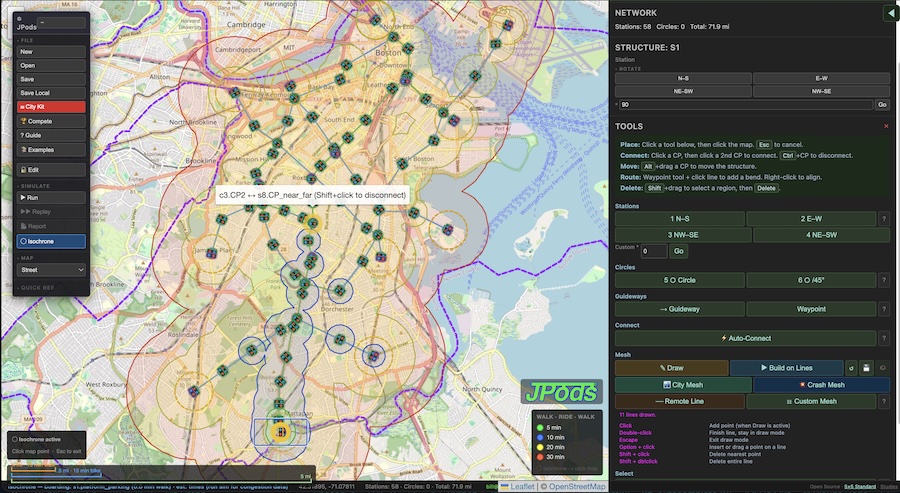
Example JPods3D network between Mattapan and Georgia Street.
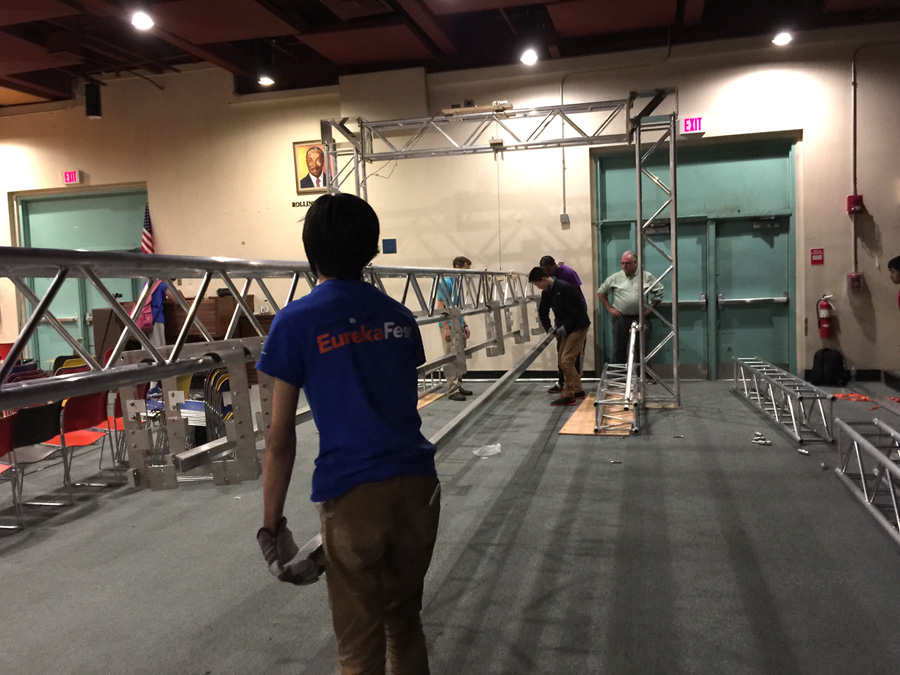
Example of 10X Makers.
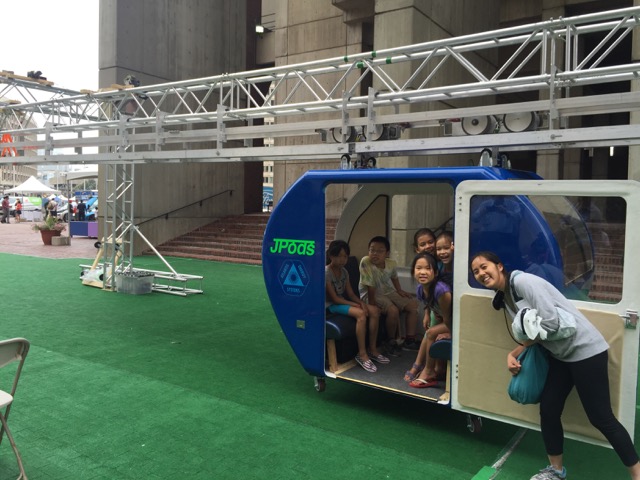
7th graders setting up JPods at John D. O'Bryant Tech

Example of the robot and network software:
JPods robots on SkyRide(opens in new tab)
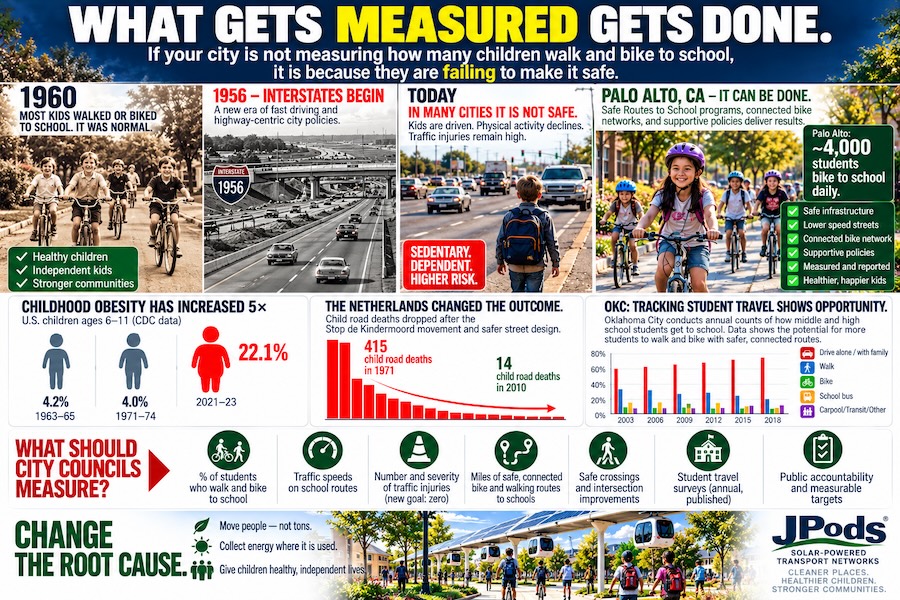
We need to store the liberty of children to have a safe childhood.